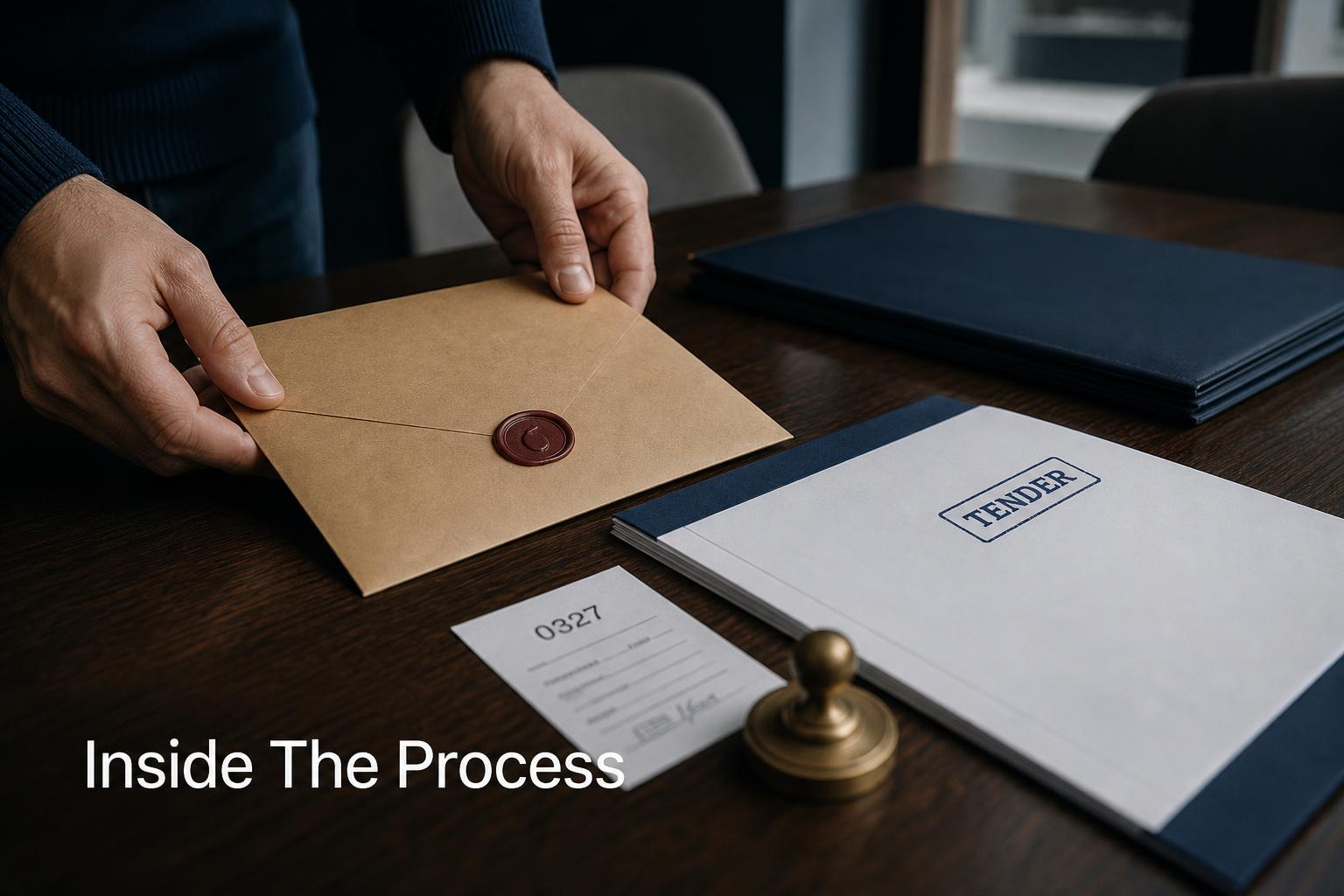
An e tendering platform gives procurement teams a practical way to run sealed supplier bids without losing control of the process. It helps you issue clear tender documents, invite the right suppliers, keep submissions confidential, manage clarifications, and record evaluation decisions in one place. That matters when you need fairness, speed, and evidence, especially if you are buying services for a school, charity, housing group, or growing business. The best e tendering platform is not just a document upload tool. It is a structured workflow that reduces ambiguity, keeps bid opening controlled, and makes the final award easier to justify. If you want to see how the wider workflow fits together, start with How it works. For teams that need to build a cleaner tender faster, the AI Tender Builder can also help create a stronger starting point before suppliers are invited.
Key takeaways
- An e tendering platform helps buyers run sealed, fair supplier bids in one controlled workflow.
- The best systems manage invitations, submissions, clarifications, and evaluation records, not just file uploads.
- An e tendering platform is usually better than spreadsheets and email when fairness and auditability matter.
- Lightweight software is often the right fit for SMEs, charities, schools, housing groups, and growing organisations.
- TenderLock supports e tendering platform workflows with AI-assisted tender creation, sealed bid management, and award records.
What is an e tendering platform?
An e tendering platform is software that helps buyers run the tender process digitally from invitation to award. In practice, it keeps supplier bids sealed, tracks questions, stores responses, and creates a record of how the winner was chosen.
This matters because procurement errors often start with loose documents and scattered communication. An e tendering platform brings the process into one system, so you can control who sees what and when. That is especially useful when multiple people need to review bids, but only some should access pricing before the official opening.
A good e tendering platform also supports consistency. You can use the same structure for each tender, compare submissions against the same criteria, and reduce the risk of missing an important clarification. For teams that want a more guided setup, TenderLock combines structured tender creation with sealed bid management and evaluation records. You can explore the brand overview at AI-assisted tendering, sealed and fair.
For readers who want a quick primer on the wider topic, this overview is useful before you compare systems:
[VIDEO_EMBED_1]
For a broader definition, think of an e tendering platform as a controlled digital procurement workspace. It should help you run a fair competition, not just store files. That difference is important, because buyers need evidence as well as efficiency. When the process is auditable, it becomes easier to defend decisions, respond to supplier challenges, and show good governance.

What should buyers expect from an e tendering platform?
A useful e tendering platform should do more than collect files. It should support the full tender workflow, from supplier invitation through to final award records. Buyers should expect clear controls, simple navigation, and an audit trail that shows what happened at each step.
The most important test is whether the platform reduces uncertainty. If users still need to manage key steps through email and spreadsheets, the system is not doing enough. A strong e tendering platform should make it easy to publish a tender, control submissions, and review responses in a structured way.
For organisations that want to understand core process design, the UK's public procurement guidance from The Platform is not relevant to software, but it reminds buyers that process and place matter: the workflow needs to be clear. For procurement software itself, look for capabilities that protect fairness and remove admin.
If you want to compare workflow before choosing a plan, TenderLock’s Red Team review is helpful for stress-testing tender language before suppliers see it. That can reveal vague scope, unclear scoring, or missing instructions early.
In short, a good e tendering platform should give you control at each stage and leave behind evidence you can trust.
Supplier invitations should be targeted, trackable, and easy to issue. An e tendering platform should let you invite the right suppliers, send them the same instructions, and record who has received access.
This is more than admin convenience. It helps you avoid accidental omissions and keeps the competition fair. It also means you can see whether a supplier has opened the tender, accepted an invitation, or started a response. That visibility saves time and reduces follow-up emails.
Sealed submissions are one of the main reasons to use an e tendering platform. They ensure bids are kept confidential until the planned opening point.
That control matters because it protects fairness and prevents early exposure of pricing or commercial terms. It also gives evaluators more confidence that every bid was handled the same way. For many buyers, sealed submission handling is the difference between a tidy tender and a risky one.
Clarification logs keep all supplier questions and buyer answers in one place. An e tendering platform should help you answer queries consistently and avoid private side conversations.
This is useful because a clarification can affect every bidder, not just one supplier. When questions are logged properly, you can share the same response where needed and maintain a clear record of what was changed or explained. That protects both transparency and speed.
Evaluation records show how each bid was assessed and why one supplier won. An e tendering platform should store scoring notes, reviewer comments, and award rationale in a structured format.
That record matters after the decision, not just during it. If a supplier asks for feedback, or if internal stakeholders need reassurance, you will have a documented trail. In TenderLock, procurement teams can pair this with FAQ guidance to understand common process questions before launch.
E-tendering platform vs procurement portal
An e tendering platform is built to run a competitive tender. A procurement portal is often broader and may focus on supplier discovery, registrations, catalogues, or general purchasing activity.
That distinction matters because commercial searchers often use both terms loosely. If your goal is a sealed, fair bid process, then an e tendering platform is usually the more relevant fit. It should handle invitations, controlled submissions, clarification threads, and scoring records. A portal may do some of that, but not always with the depth needed for tender governance.
If you are choosing between the two, ask one simple question: does the system help me award a contract fairly and defensibly? If the answer is no, it may be a portal, but not the right e tendering platform for managed competitions.
This is also where terminology can mislead buyers. Some pages talk about platforms in very broad terms, but procurement teams need a narrower use case. The best e tendering platform supports a formal competition, not just supplier browsing or file storage. That keeps the page aligned with commercial intent and helps internal users know exactly what the software does.
For buyers who need a practical route from setup to launch, TenderLock’s Pricing page is useful because it helps teams match capability to budget without overbuying enterprise complexity.
E-tendering platform vs spreadsheets and email
An e tendering platform is safer and more controllable than running a tender through spreadsheets and email. Email can work for a very small process, but it becomes messy fast, especially when questions, versions, and bid attachments start multiplying.
Spreadsheets also create risk. People edit different copies, version control breaks down, and important notes get lost in inboxes. By contrast, an e tendering platform keeps the process in one place and gives you a clearer audit trail.
That does not mean every tender needs a heavyweight system. However, once fairness, confidentiality, or formal approval matters, software becomes much more valuable. It removes manual chasing and helps your team stay consistent.
A useful way to judge the difference is to ask whether your current method can answer these questions clearly: who was invited, who submitted, when the bid was opened, what clarification was issued, and why the winner was selected. If your answer depends on digging through email folders, an e tendering platform will usually pay for itself in saved time and reduced risk.
For teams that want a modern example of a cloud workflow, the introduction from Fortender is a helpful reference point:
[VIDEO_EMBED_2]
The goal is not software for its own sake. The goal is a cleaner tender process with fewer mistakes and stronger evidence.
When a lightweight e tendering platform is better than enterprise procurement software
A lightweight e tendering platform is often the better choice when you need speed, clarity, and fair bid handling without a long implementation project. It suits SMEs, charities, schools, housing groups, local organisations, and operational teams that run occasional or moderate-value tenders.
Enterprise procurement suites can be powerful, but they may be more than you need. They can also require more setup, more training, and more internal support. If your real need is to issue structured tenders quickly, keep submissions sealed, and record decisions properly, a lighter system can be a better fit.
This approach is especially useful when procurement expertise is limited. A guided e tendering platform can help users avoid vague specifications, missing criteria, and inconsistent evaluation notes. That means better tenders with less reliance on specialist consultants.
The key is fit. Choose a platform that matches your volume, governance needs, and team size. If your process is simple but still needs fairness and structure, lightweight software is often the smartest option. If your organisation wants to trial the process first, TenderLock offers a free first live tender plan that helps teams test the workflow before committing to a longer-term setup.
In short, the best e tendering platform is the one your team will actually use well. Simplicity often wins when the process is important but not overly complex.
How TenderLock supports e tendering platform workflows
TenderLock is designed to make e tendering platform workflows easier for everyday buyers. It combines AI-assisted tender creation with sealed bid handling, supplier response management, bid checking, evaluation support, and award records.
That matters because most teams do not need more complexity. They need a clearer route from tender setup to final decision. TenderLock helps users build better tender documents, reduce ambiguity before issue, and keep supplier responses organised in one place. The result is a more controlled process with less manual effort.
TenderLock also supports review quality. The Red Team and Blue Team approach helps teams pressure-test the tender before it goes live and then assess responses more consistently after bids arrive. That is useful when the buying team is small, or when different stakeholders need a shared evaluation structure.
If you are comparing options, start with the platform overview at AI-assisted tendering, sealed and fair. Then review the How it works page to see how invitations, sealed submissions, clarifications, and scoring fit together.
For buyers who want a practical, audit-friendly e tendering platform, the value is not just automation. It is confidence. You can run a fair process, keep the bids sealed, and keep the record clean from start to finish.
Frequently asked questions
What is the difference between an e tendering platform and a procurement portal?
An e tendering platform is built to manage sealed, fair competitive bids. A procurement portal is often broader and may focus on supplier discovery, registrations, or general purchasing activity. If you need controlled invitations, sealed submissions, clarification logs, and evaluation records, the e tendering platform is usually the better match.
Can a small team use an e tendering platform effectively?
Yes. A small team can benefit greatly from an e tendering platform because it replaces email chaos with a structured workflow. It helps non-specialists run a more professional tender, keep bids sealed, and document the final decision without needing a large procurement department.
Why use an e tendering platform instead of spreadsheets?
An e tendering platform is safer than spreadsheets because it centralises the process and reduces version control problems. It also keeps clarifications, bid opening, and scoring records together, which makes the process easier to defend and easier to repeat.
How does TenderLock help with e tendering platform needs?
TenderLock supports e tendering platform workflows with AI-assisted tender creation, sealed bid management, supplier invitation and response handling, clarifications, bid checking, and award records. It is designed for teams that want a fair process without heavy procurement overhead.